Five perfect schedules. Registration, solved in seconds.
React NativeExpoFirestorePuppeteerExpressSQLiteViteTypeScript
iOS and Android, pre-launch. Store builds are prepared but not distributed; the target is to launch before Fall 2026 registration.
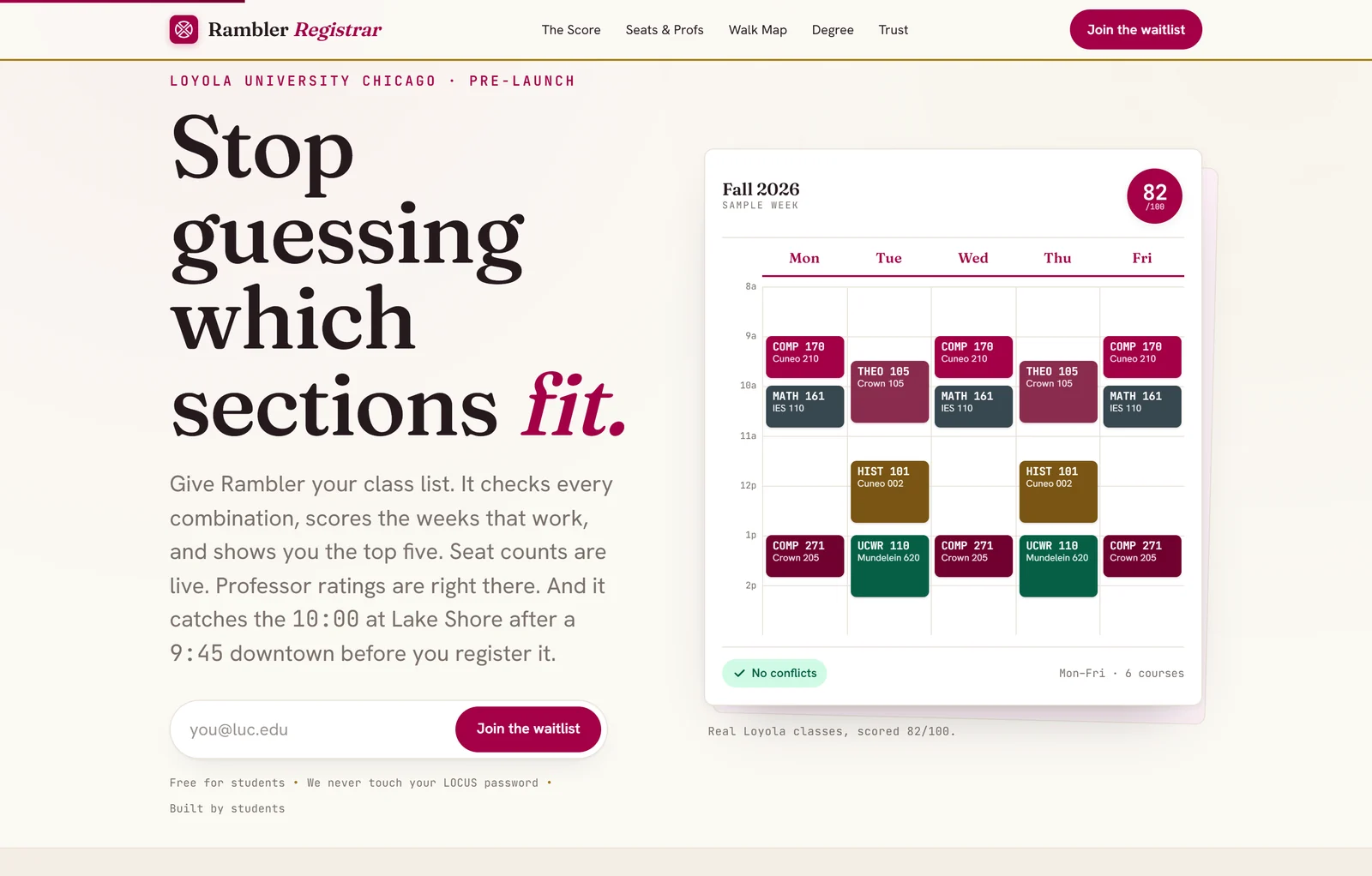
Rambler Registrar is a course scheduling app for Loyola University Chicago students. You tell it which courses you need; it builds every conflict-free way to take them, scores each one for how liveable the week actually is, and hands back the five best. Underneath that is a data pipeline: a headless Chrome scraper reads the university's public guest class search every morning at ten, a catalog crawler pulls requirements for every program, and the results land in SQLite and sync to Firestore.
The app talks to that Firestore directly rather than to the server. An earlier version routed everything through a REST API; the whole surface was deleted once the catalog, section and profile reads moved client-side behind two hundred-odd lines of security rules, and what is left of the server is the scraper host and a small proxy for library hours, study rooms and campus events.
It never asks for a LOCUS password. Everything it reads is the same public course catalog any student can open, and completed coursework is whatever the student types in. You still enter your own class numbers when registration opens. The app is there to tell you which ones to enter.
What it does
Five schedules, generated
Pick up to eight courses and the app searches every conflict-free way to take one section of each, then returns the five best. The search is a deterministic depth-first walk with a 50,000-step budget and a 400-schedule cap, ordered fewest-sections-first so the tightest courses are placed before the flexible ones. When nothing fits it does not just shrug: a leave-one-out sweep names the course that is blocking the rest.
A score you can audit
Each schedule starts at 100 and loses points for the things that make a semester miserable: twelve for a building transfer you cannot walk in the gap, twenty for a closed or waitlisted section, six for an extra day on campus, three for a day with no lunch break, two each for starting before nine or ending after six, and one and a half for every half hour of dead time. The weights are published rather than hidden, and the same scorer will rate a schedule you already have.
The transfers that do not work
Walk times come from real building coordinates: haversine distance, a 1.3 factor for streets that do not run diagonally, at eighty metres a minute. A ten-minute passing period against a fifteen-minute walk is flagged as tight and costs schedule points. The two campuses are about eight miles apart, so a transfer between them is called impossible rather than tight, before registration rather than after.
Seats, watched honestly
A watch on a full section sends a push notification when a seat opens. The poller runs every twenty minutes from 9 a.m. to 9:40 p.m. Chicago time, and deliberately not overnight, because the source is unreliable then. The product says so out loud instead of claiming round-the-clock alerts it cannot deliver.
230 programs of progress
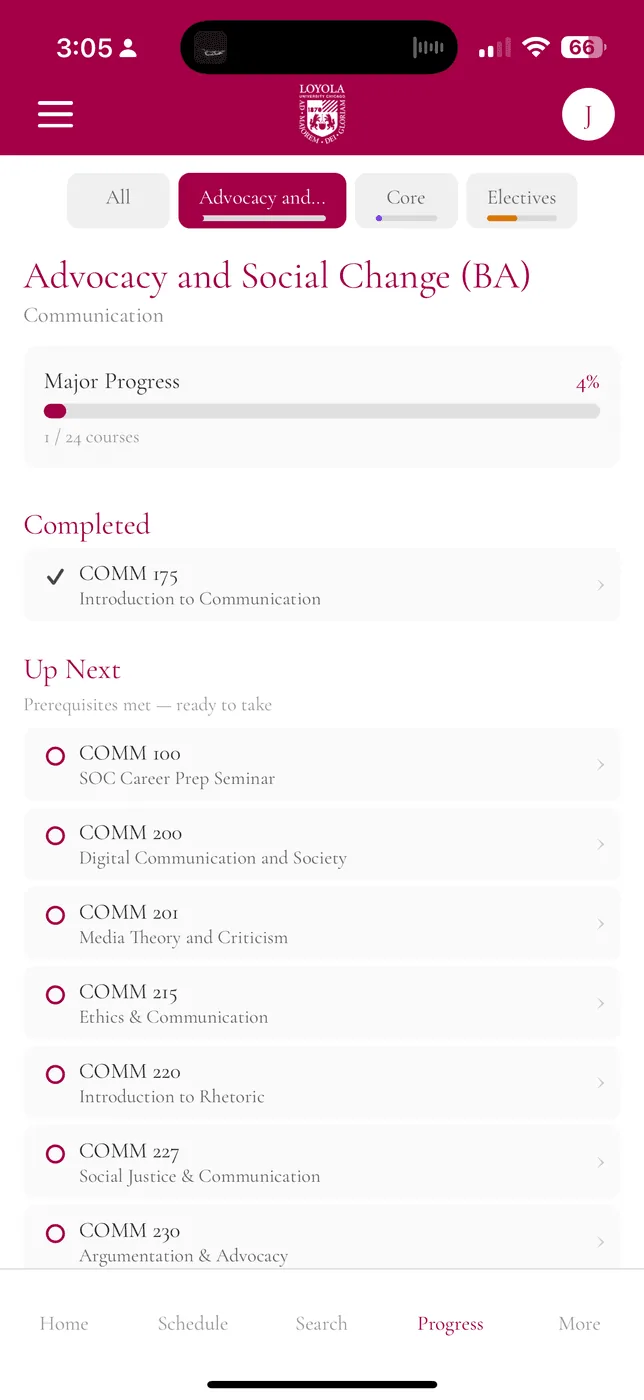
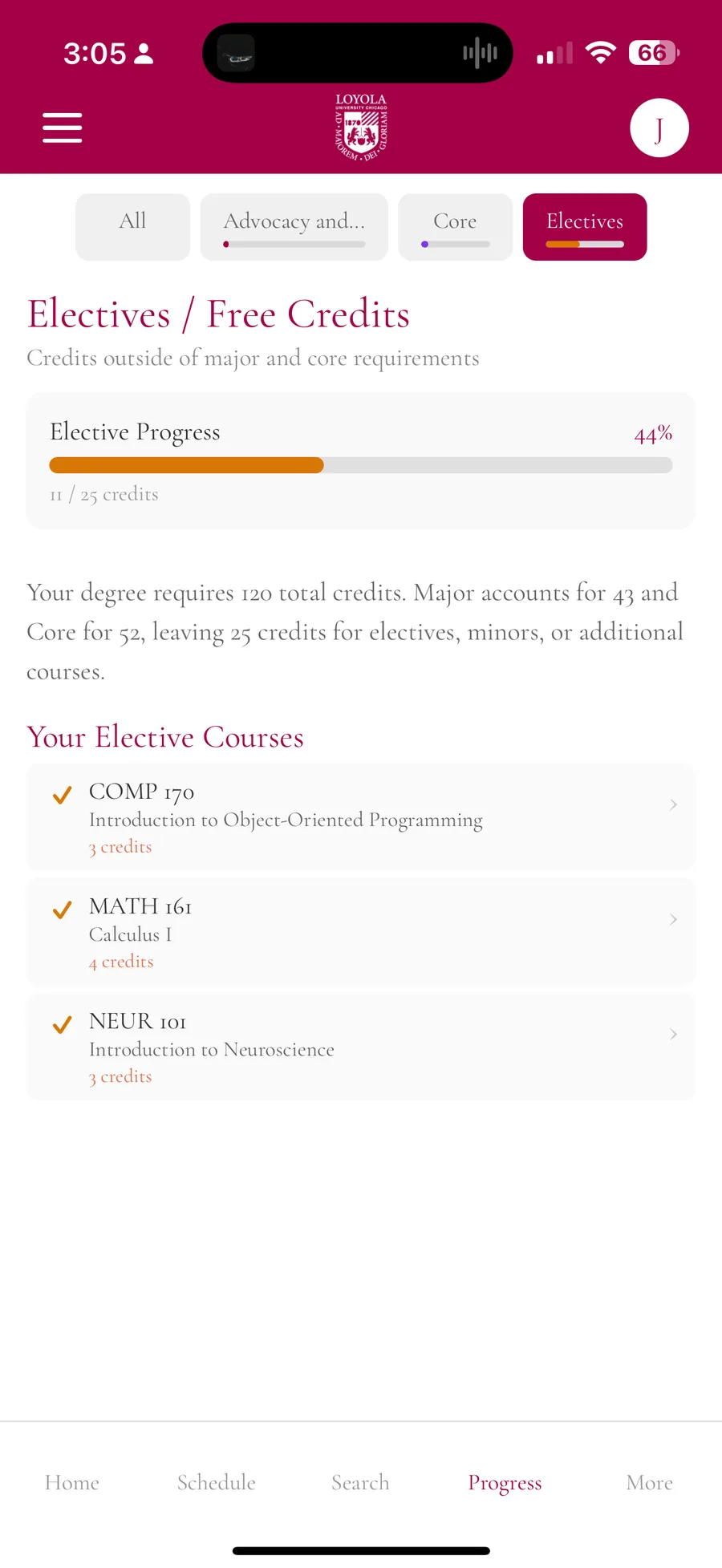
Every major, minor and degree in the catalog, with requirements sorted into done, ready to take, and still blocked by a prerequisite. Requirements come in three shapes and all three are modelled: plain required courses, choice groups that need N units from a set, and prose electives like two 300-level philosophy courses. A what-if explorer prices a major or minor change in extra semesters before you commit. It is a pacing estimate, not a substitute for the university's own degree audit.
A quiz that reranks everything
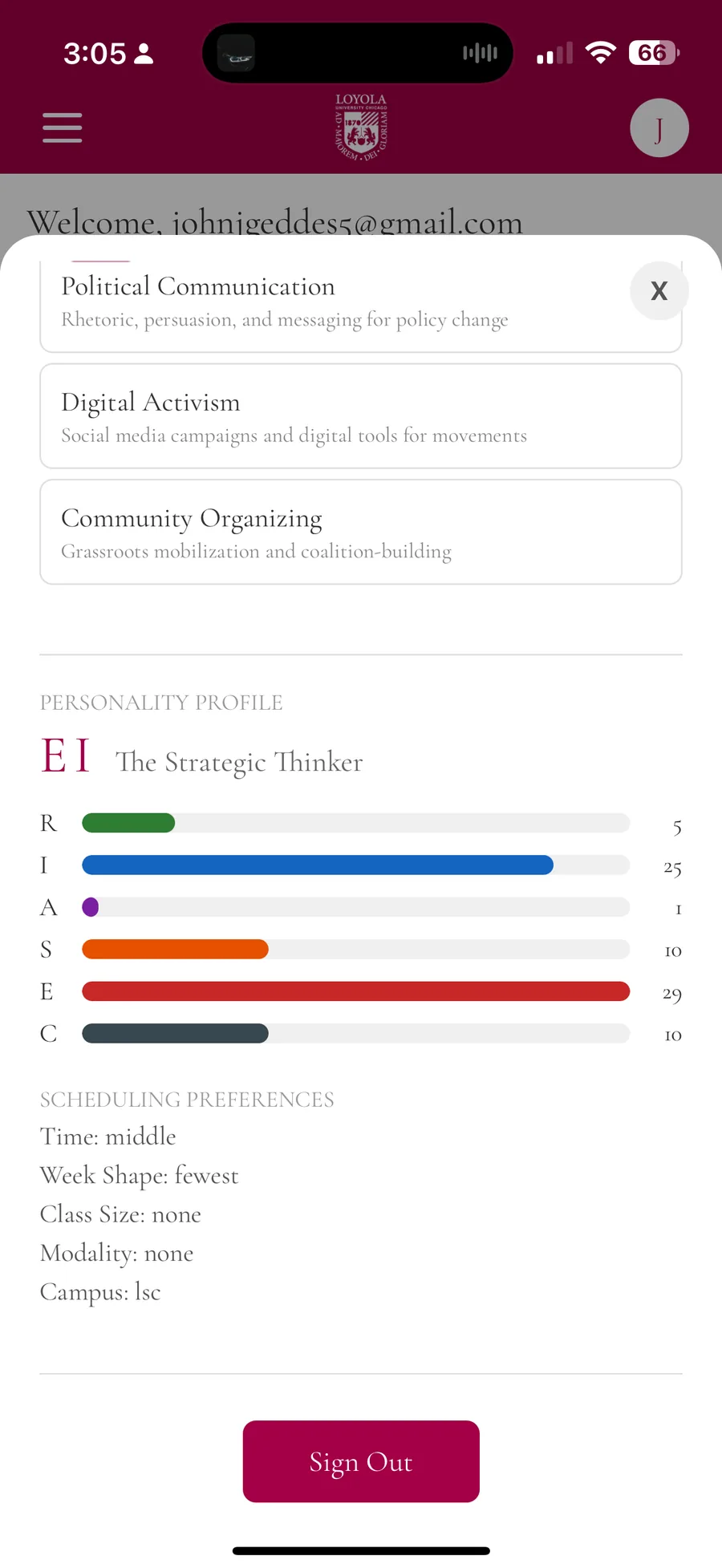
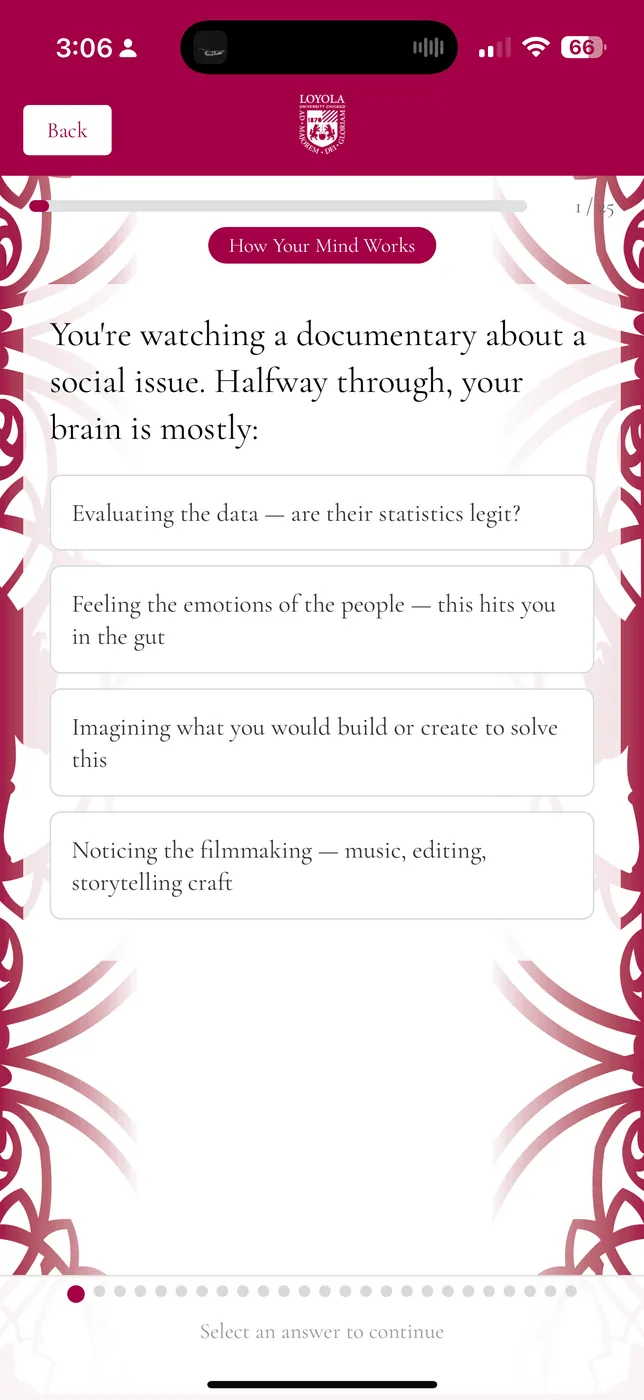
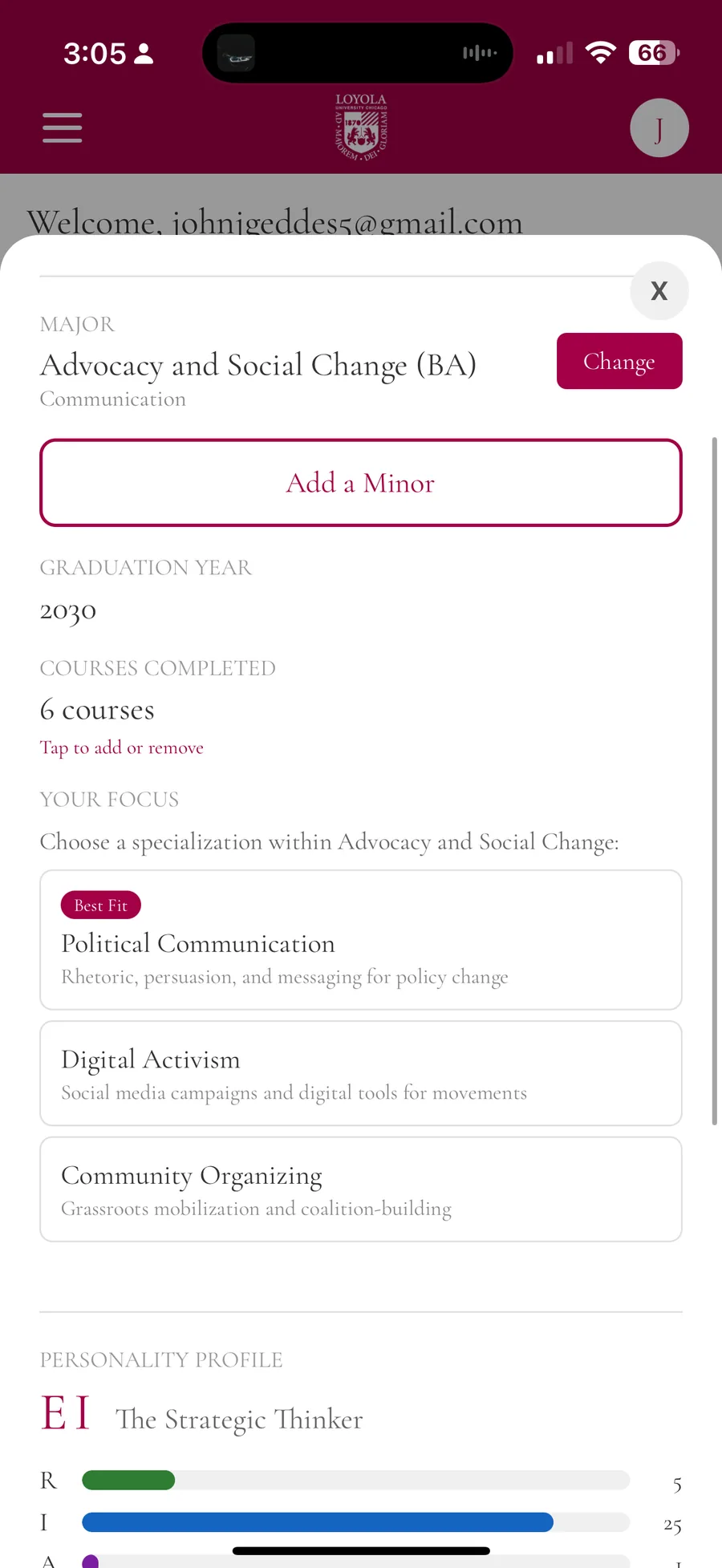
Twenty-five scenario questions across four sections produce a Holland code across six preference types. Undecided students get majors ranked by fit; decided students get focus areas inside their major, weighted by how much time is left. Two students holding the same course list can land on a different top pick.
Programs in the catalog230
Courses2,082
Fall sections tracked2,450
Enrollment snapshots262,857
Buildings with coordinates23
Tests across the app270
Read from the live catalog database for the current term, term 1266.
The site that launches it
The waitlist site is its own codebase: React 18 and Vite 6 in TypeScript, plain CSS modules, no router and no component library. It ships eight static routes as a multi-page app, and each of the app's real features gets a scroll-driven set piece: a pinned hero that resolves a chaotic week into a scored schedule, a gauge that counts up while a receipt itemises every penalty, a seven-stop walk across campus.
One motion library loads, lazily, in a single chunk of about fifteen kilobytes gzipped, gated behind reduced-motion; everything else is hand-rolled CSS and native browser APIs. A budget script fails the build if any route's entry JavaScript passes ninety kilobytes gzipped, and a Puppeteer harness shoots every route at three viewports. The honesty rules are written into the repo: no invented signup counts, no fabricated queue position, and sample data labelled as sample.
The scraper is the unglamorous half and the reason any of it works. It walks fifty-one subject codes a day, restarting the headless browser every fifteen to shake off stale sessions, retrying up to three times with a five-minute backoff, and it has been running long enough to hold more than a quarter of a million enrollment snapshots across a hundred days. That history is what turns a seat count into a warning about which sections fill first. It runs under PM2 on a Windows box with a scheduled health monitor that resurrects it if it dies.
Professor ratings come from Rate My Professors and are labelled as such. The app started as a college practicum project and has been rebuilt since into something Loyola students could actually register with.