Fourteen habits. Encrypted on your phone.
React NativeExpoAES-256-CTRFirebaseCloud FunctionsRevenueCatNext.jsTypeScript
iOS and Android builds, pre-launch. The site is live and the app is at version 1.5.7 in store prep. The App Store listing is reserved but not public yet.
Cipher is a health and habit tracker for iOS and Android, built in React Native and Expo. It tracks fourteen things (drinking, sleep, calories, cycles, screen time, workouts, blood pressure, a floss habit, and the rest), and the whole product is arranged around one promise: the entries are encrypted on the phone before they reach the cloud, so the server holds ciphertext and nothing else.
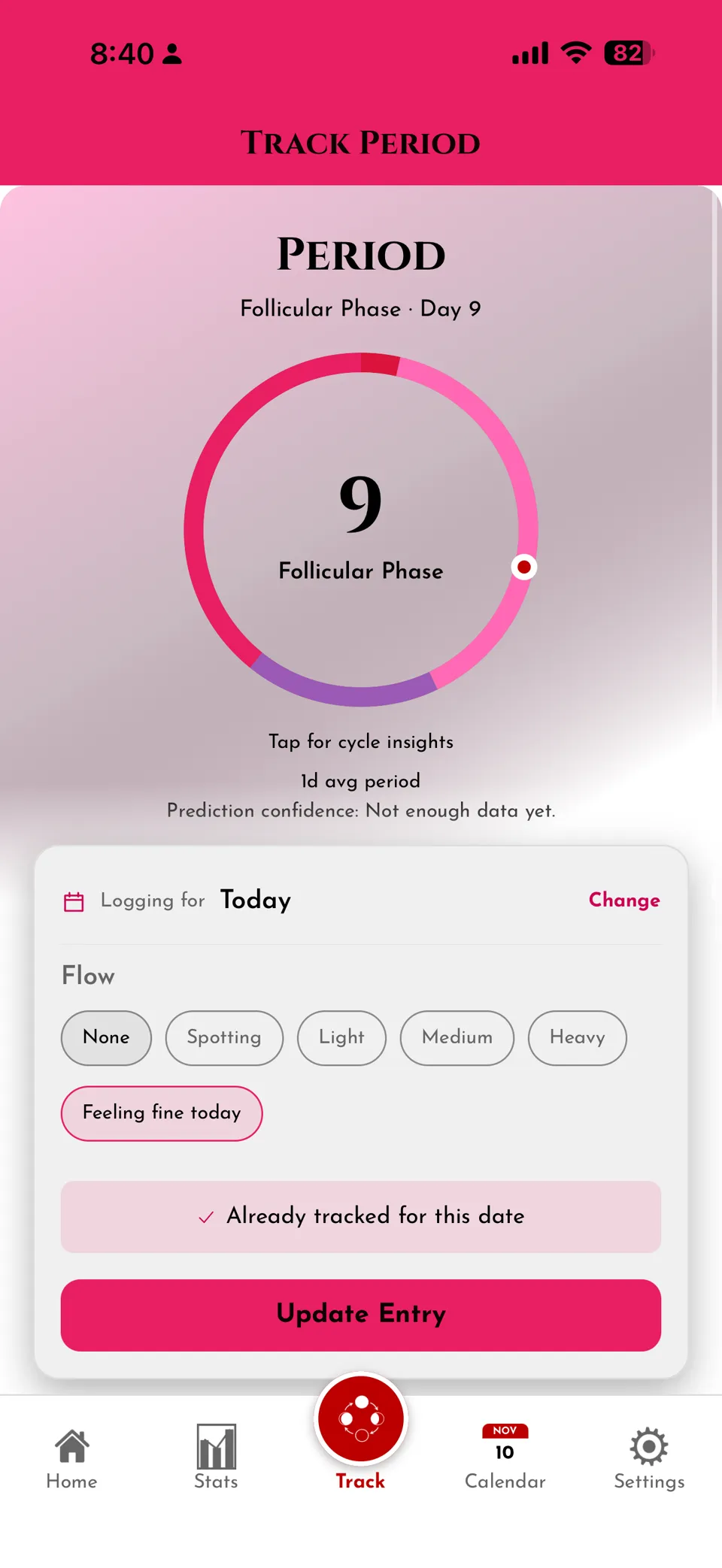
That promise decides the architecture. There is no password reset, because the key is derived from the password and never sent anywhere. A PIN unlocks the app on a device that is already signed in; on a new device the password is the only way back in, and the app makes you write it down before it finishes setting up. Accounts are username-only, so no email address is ever collected. Firestore stores month-sharded encrypted blobs behind owner-only security rules tested against the emulator, and a sync re-encrypts and sends only the months whose content changed since the last push.
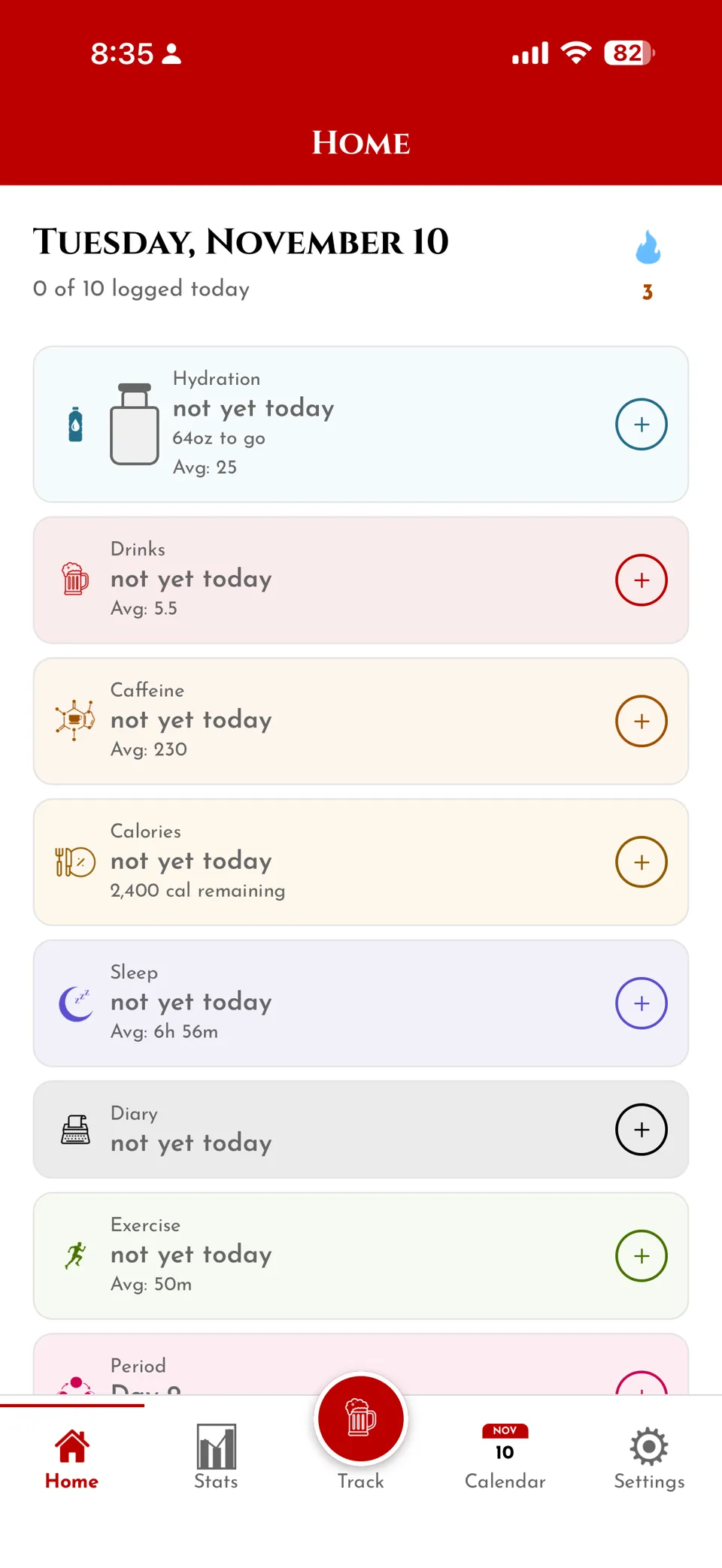
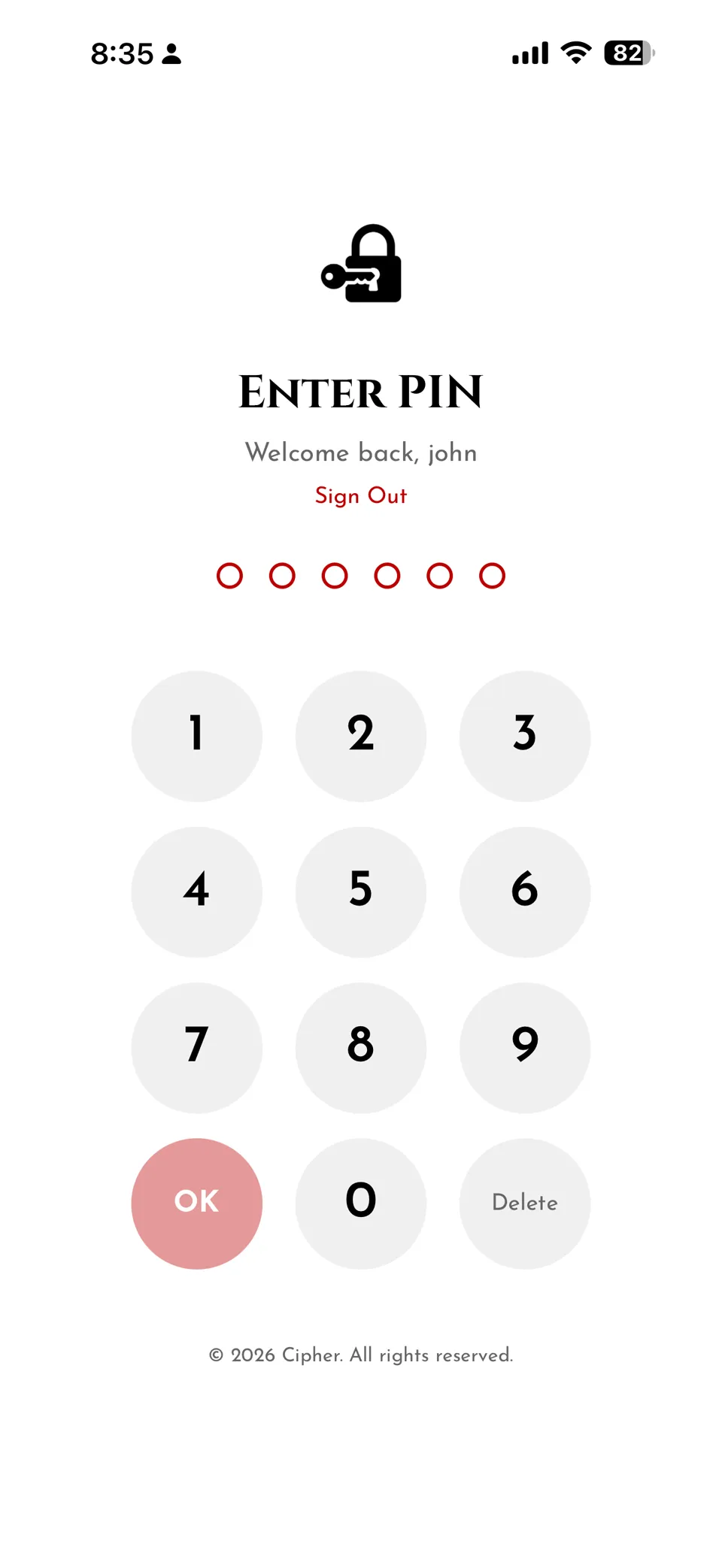
Home with ten of the fourteen trackers switched on, and the PIN that stands in for the password on a signed-in phone.
What it does
Encrypted before it leaves the phone
Entries are encrypted on the device with AES-256-CTR under a key derived from the user's password by 200,000 rounds of PBKDF2-HMAC-SHA256. Every write gets a fresh 128-bit IV and an HMAC-SHA256 signature that covers the iteration count itself, so the derivation cost cannot be downgraded by rewriting a stored blob. The server only ever receives the ciphertext. The derived key is kept on the phone wrapped under the PIN, so a daily unlock does not pay the 200,000 rounds again, and concurrent callers share one derivation instead of each running their own.
Fourteen trackers, one registry
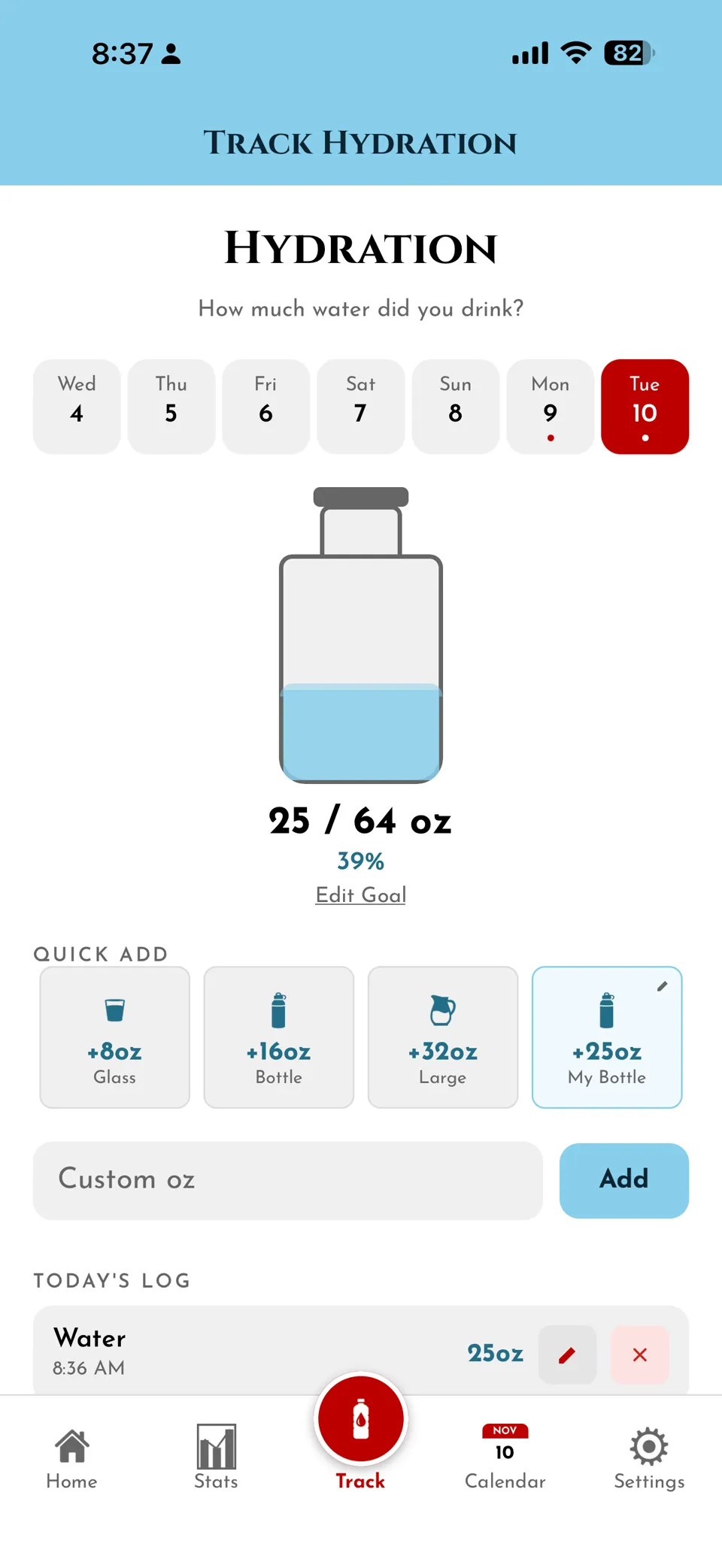
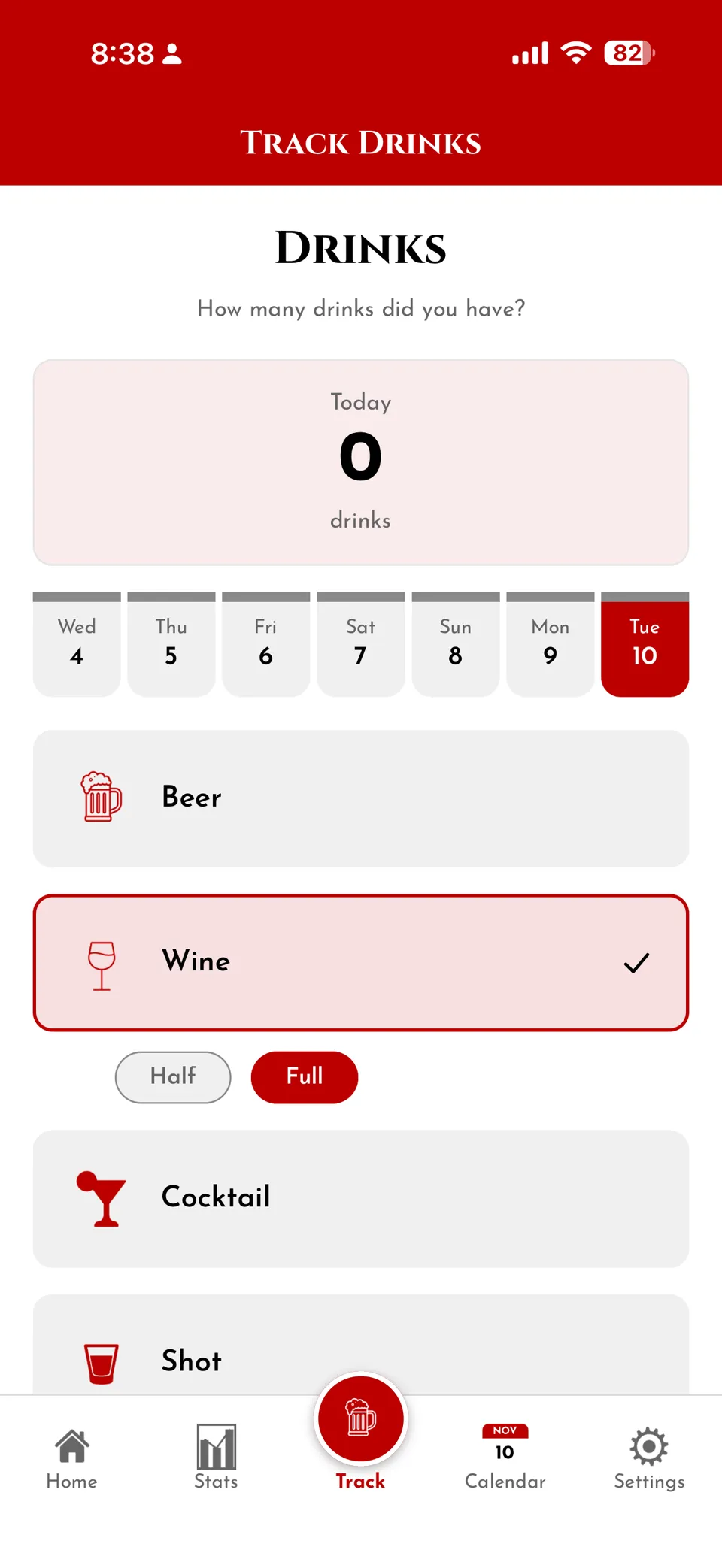
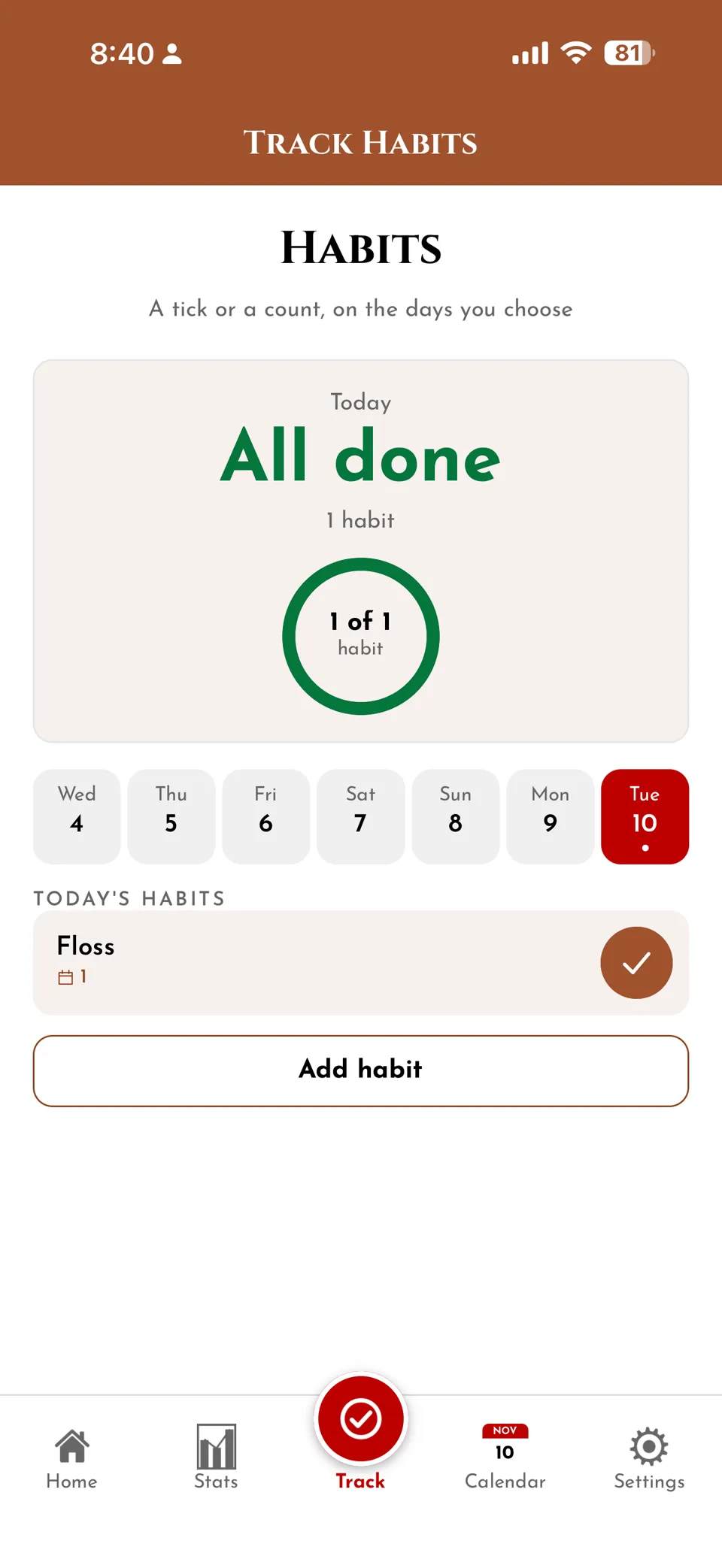
Drinks, screen time, caffeine, cannabis, sleep, calories, period, diary, nicotine, pills, hydration, exercise, vitals and habits. Colour, ink, unit, trend direction, reminder shape and quick-add behaviour all live in a single pure-data registry with no imports, which is what lets the test runner execute it directly and pin the list. Tutorials run on the real screens, one for every tracker but Hydration.
Stats computed on the device, by rules
Seven, thirty and 365 day views, per-tracker trends and cycle predictions, all derived locally from decrypted data. A daily average divides by the days that have a log, never by the calendar. A previous window with nothing in it reads as no prior data rather than a made-up percentage. The Impacts card pairs the user's own days (days with caffeine after two in the afternoon against days without, say) and states both counts in the user's units, and only once an evidence gate is met: five days in each arm, fourteen paired, and a standardised difference above a floor. It never names a cause, a percentage or a piece of advice, and a test scans every sentence for the words it is not allowed to use.
One exercise tracker, four session types
Strength, climbing, cardio and intervals share a tracker. The catalogue is 877 exercises with instructions, generated from a pinned public-domain dataset, and the personal-record engine only fires on a strict improvement. Climbing logs flashes, sends and attempts by venue, keeps a project list per gym and draws a grade pyramid, with four grade systems on one comparable scale. Cardio uses sport-correct pace conventions, including the /100m swim and /500m erg splits. Rest timers run on the lock screen as an iOS Live Activity and an Android ongoing notification, and a weekly plan names the day's workout.
Barcode scanning without shipping the keys
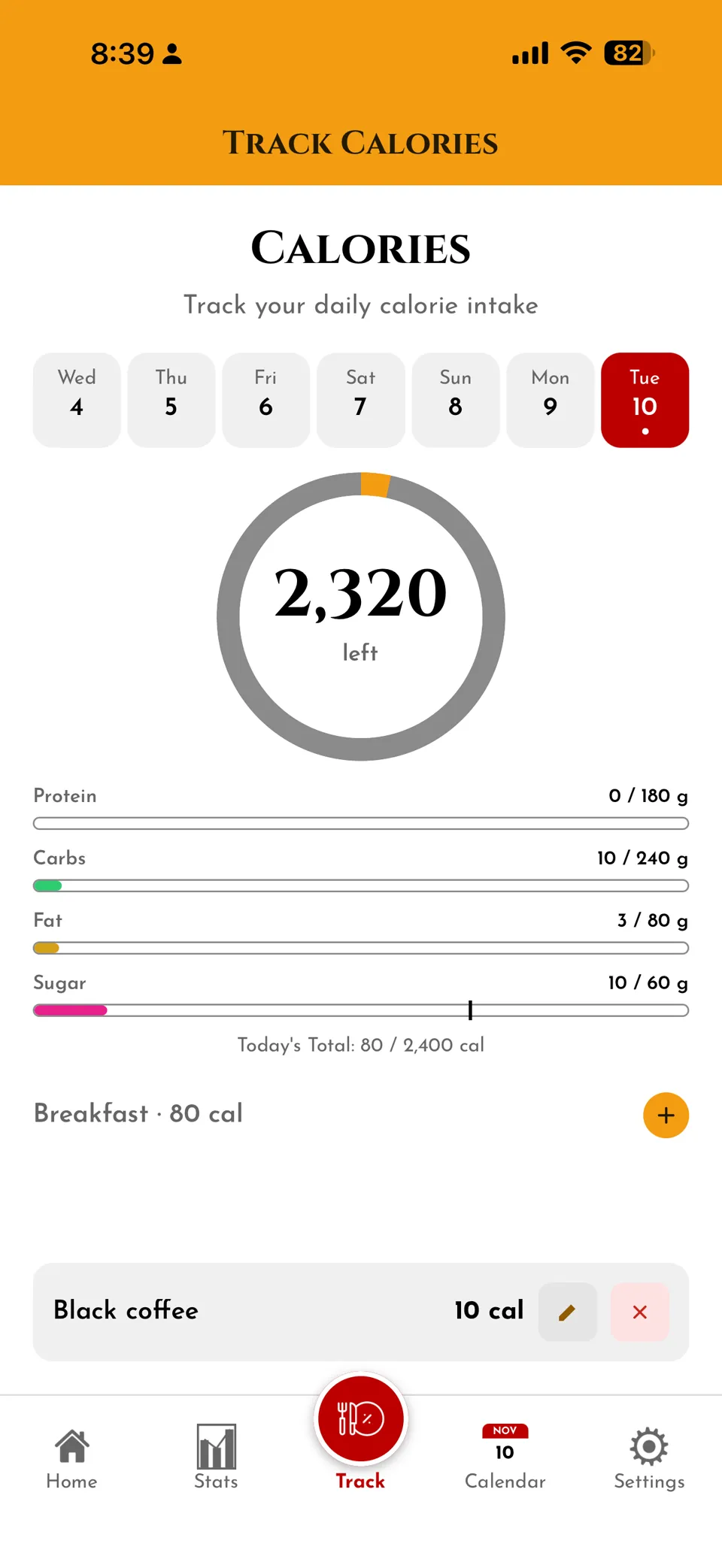
Calorie logging scans GTIN-13 barcodes and searches a nutrition database. A security audit found the food API credentials sitting in the client bundle, so requests now route through an auth-gated Cloud Function that signs them server-side, behind a local cache and a client rate limit.
Screen time read from the OS
A custom Expo config plugin injects an Android UsageStatsManager module, checks the usage-access permission, deep-links to the system settings page to grant it, and reads real per-day device screen time. It no-ops cleanly on iOS, where the equivalent API needs an entitlement from Apple.
A report you can hand to a doctor
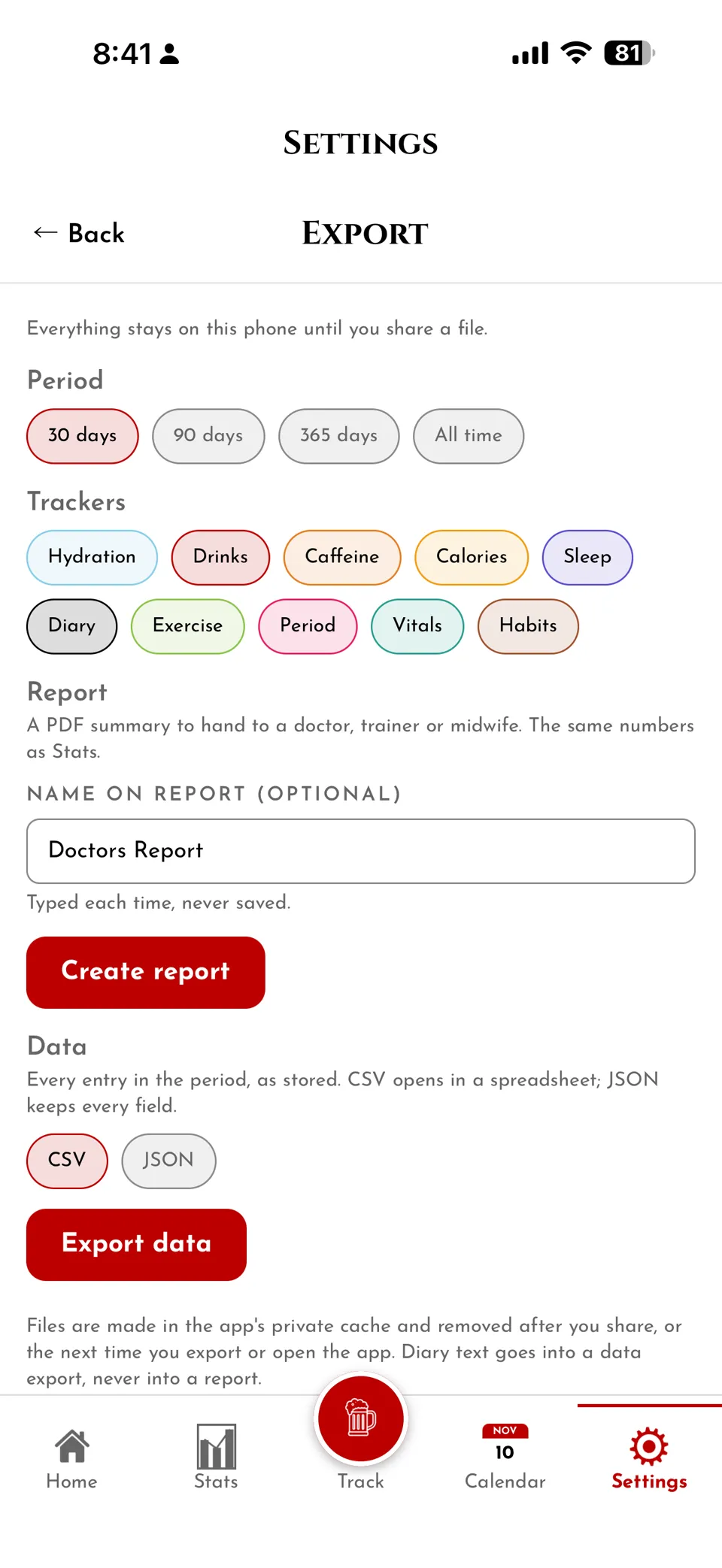
The Export pane builds a PDF over 30, 90 or 365 days or all time for the trackers you pick, with the same numbers as the Stats screen because it runs the same compute modules. The name on the report is typed each time and never saved. Data goes out as CSV or as the stored JSON untouched. Files are written to the app's private cache and swept after sharing, and diary text goes into a data export, never into a report.
Product rules the tests enforce
On the five trackers where less is better (drinks, caffeine, nicotine, cannabis, screen time) no celebration, success haptic or animation ever fires on a consumption entry; rewards attach to clean days and reductions against the user's own baseline. Calories treats under and over the goal identically. Period keeps no streak or score, and a late period never reaches a notification. Every animation gates on the reduced motion setting. Each of these is a test that fails the suite, not a note in a document.
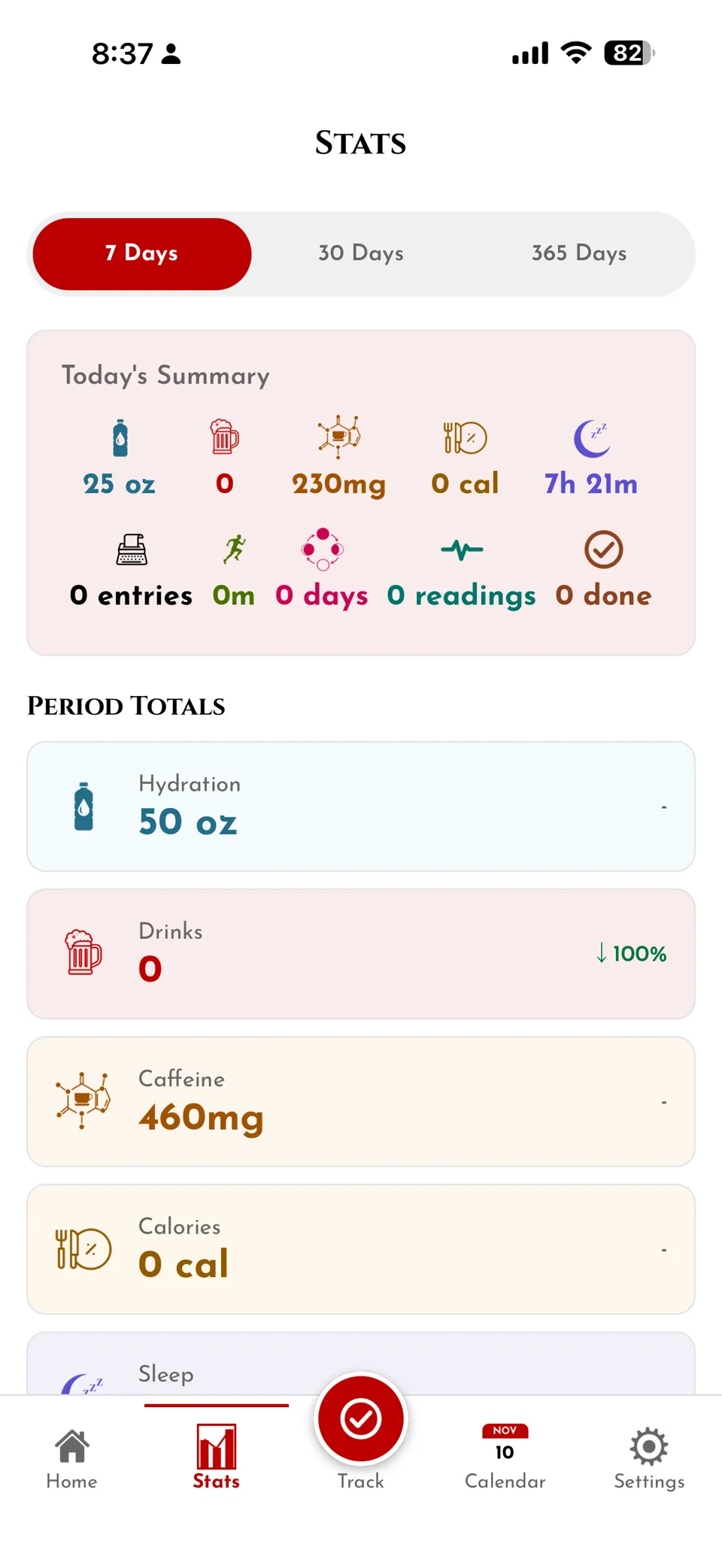
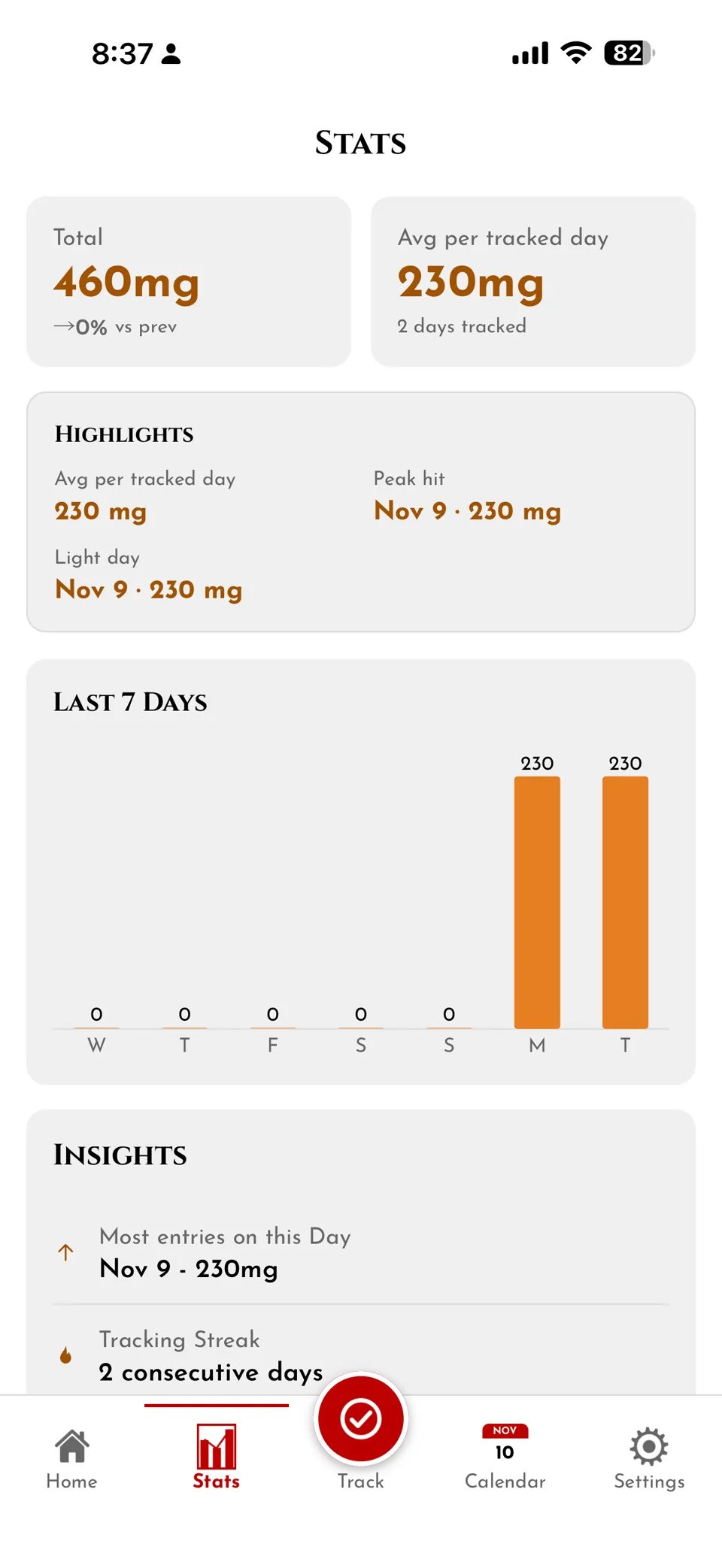
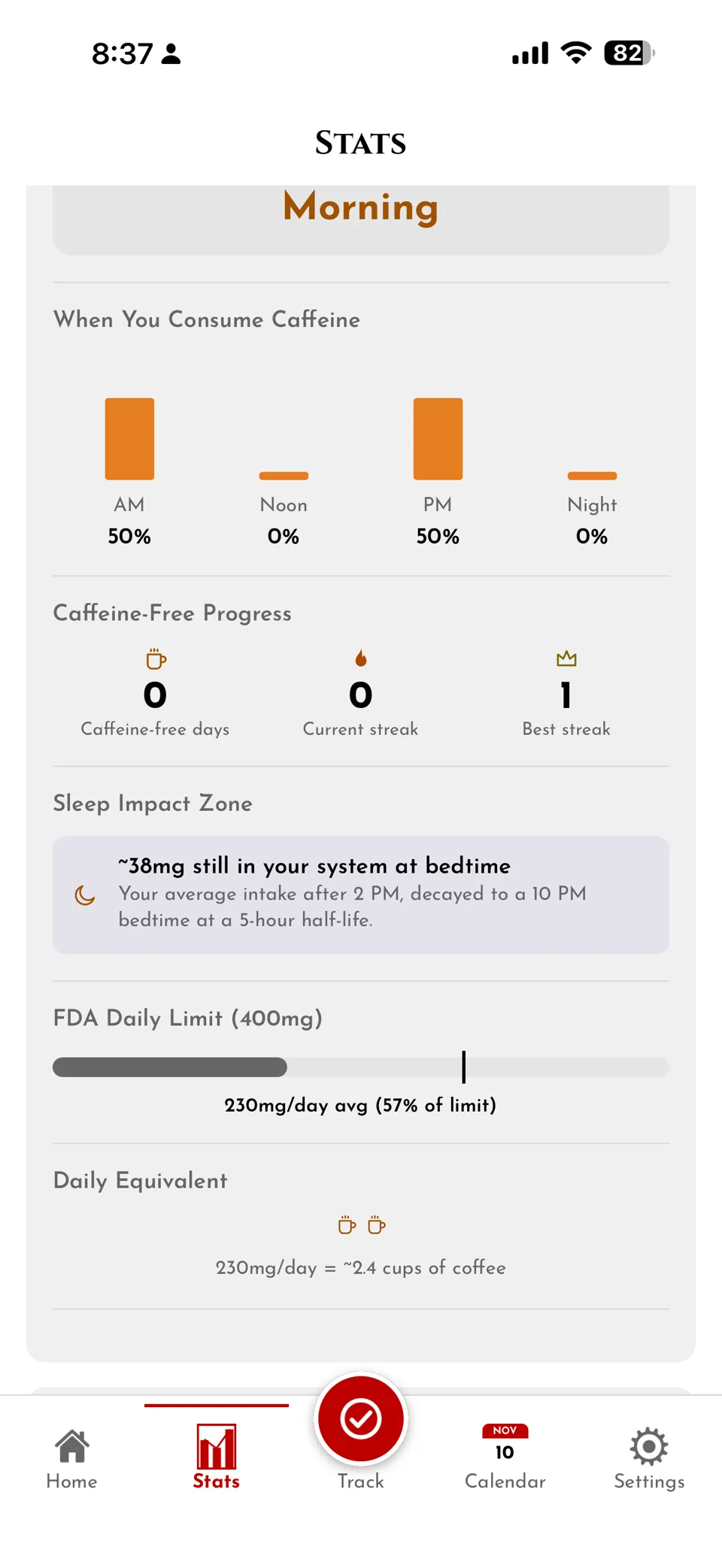
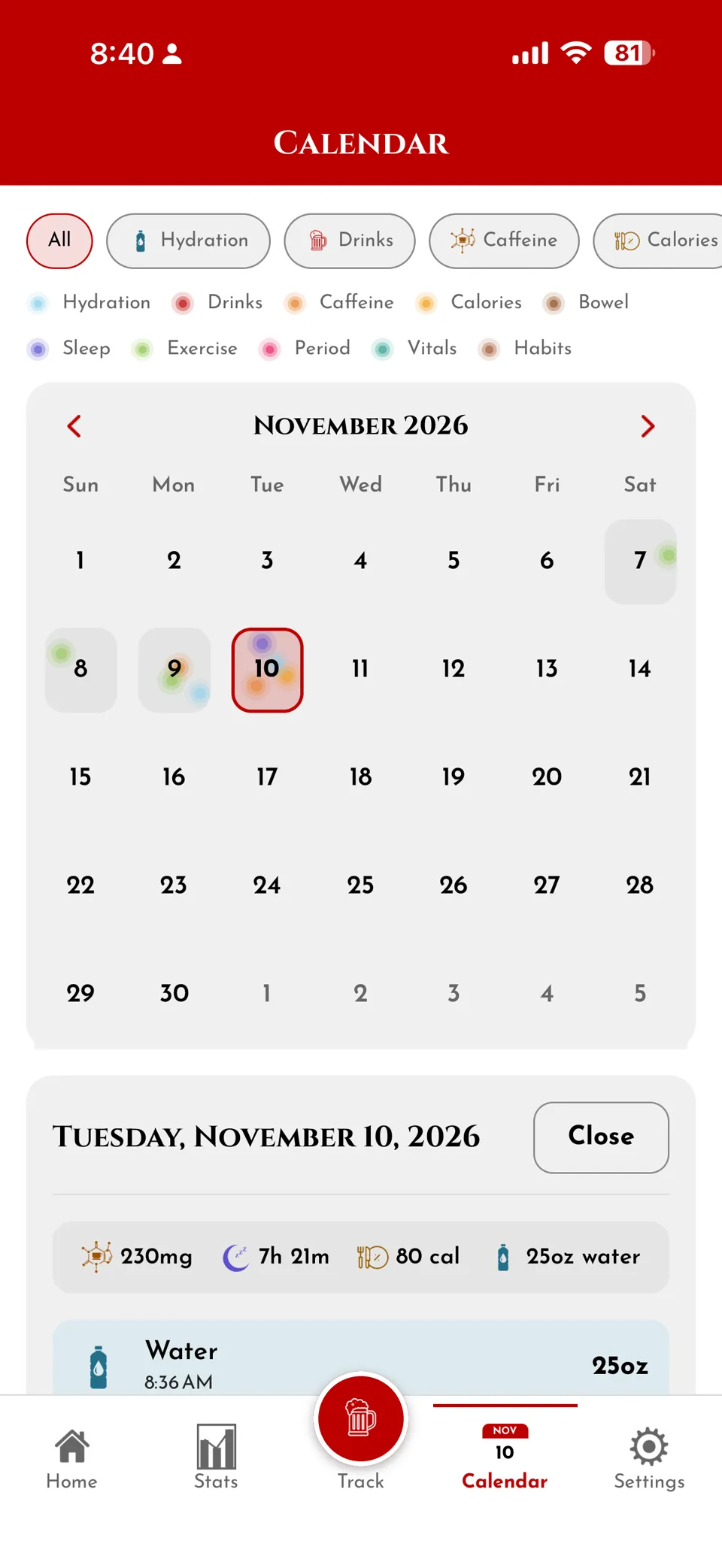
Stats and Calendar are computed from decrypted data on the phone. The sleep impact line is the one place a down-good tracker is allowed to state a fact about itself.
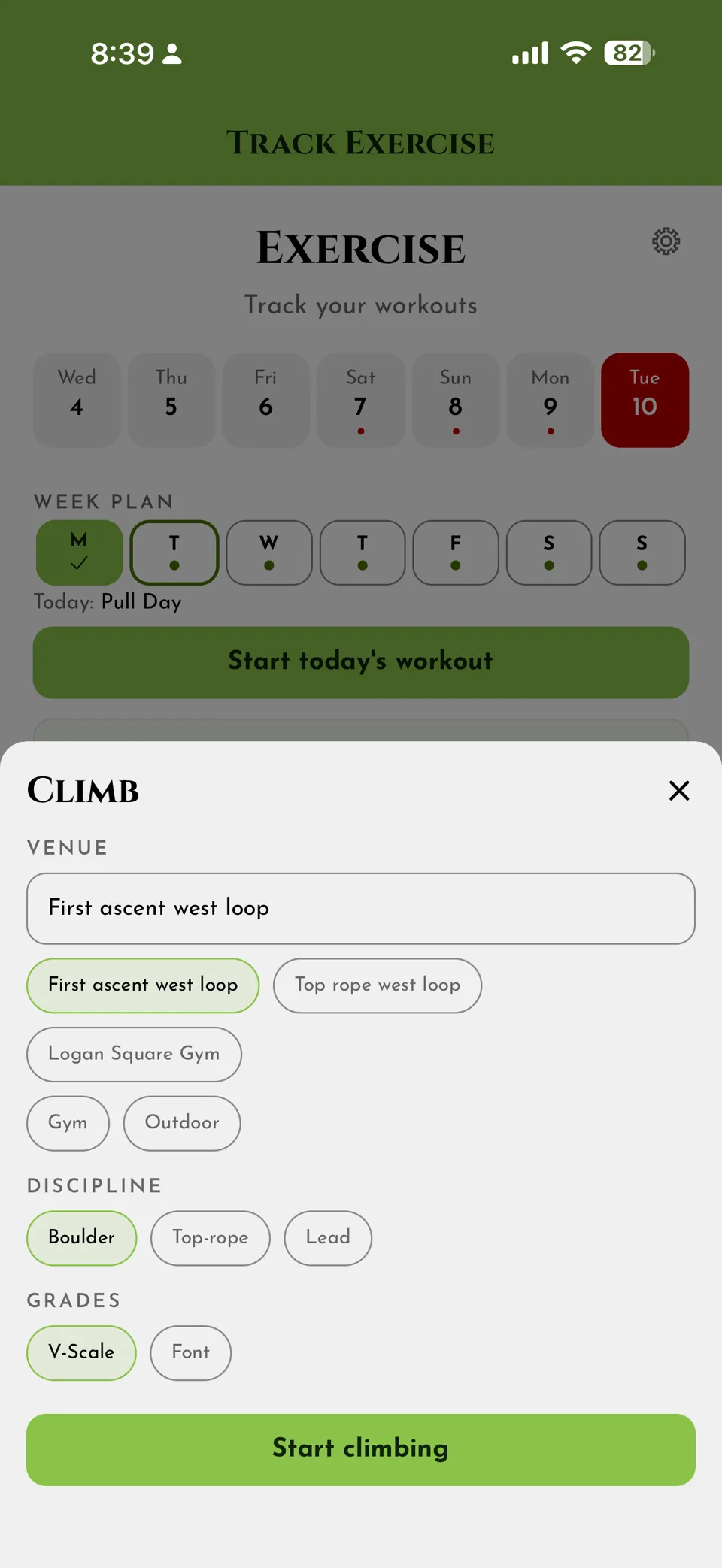
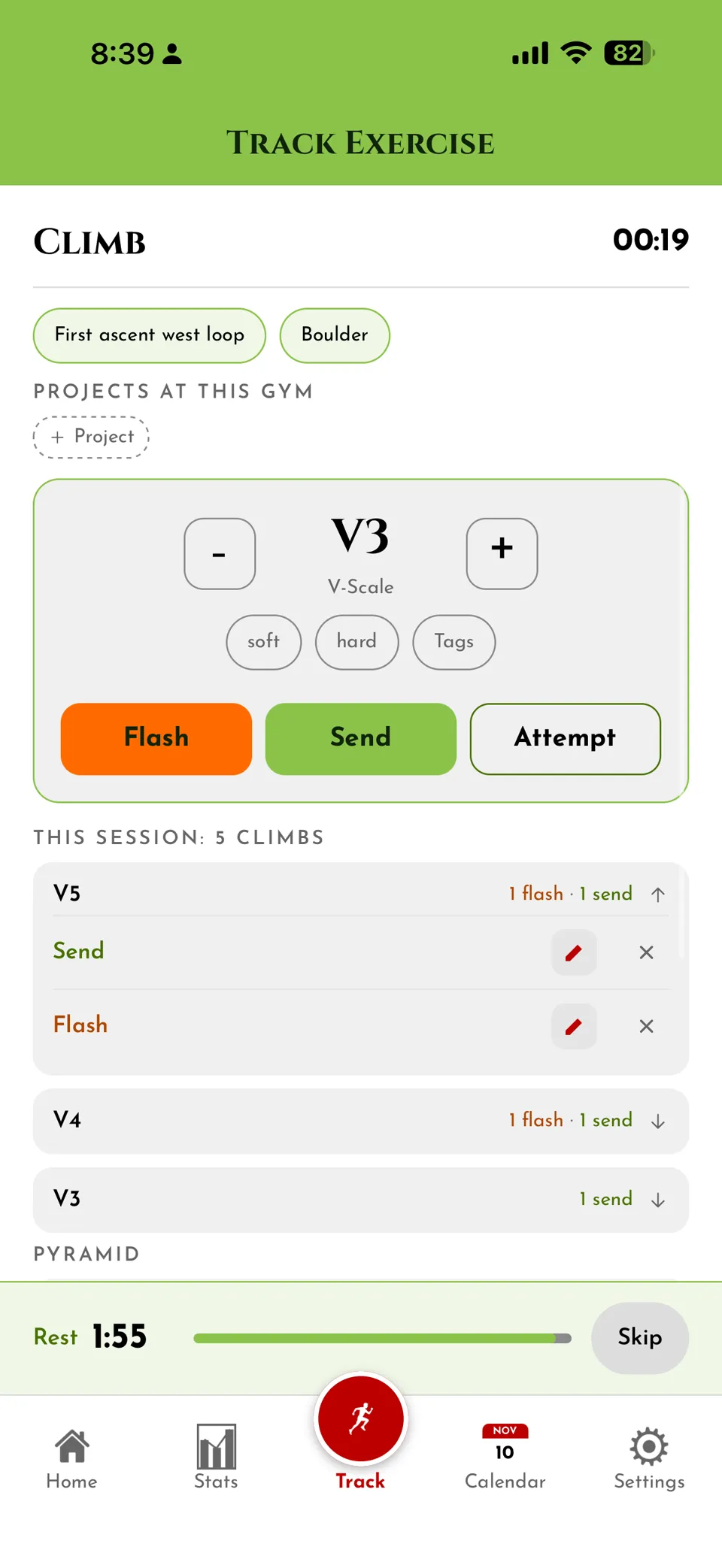
Climbing inside the exercise tracker: a venue with its own project list, a grade stepper, and the rest timer that also runs on the lock screen.
Trackers14
Unit tests, all passing3,822
PBKDF2 rounds per key200,000
Exercises in the catalogue877
Icons drawn to replace emoji36
Tests on the marketing site163
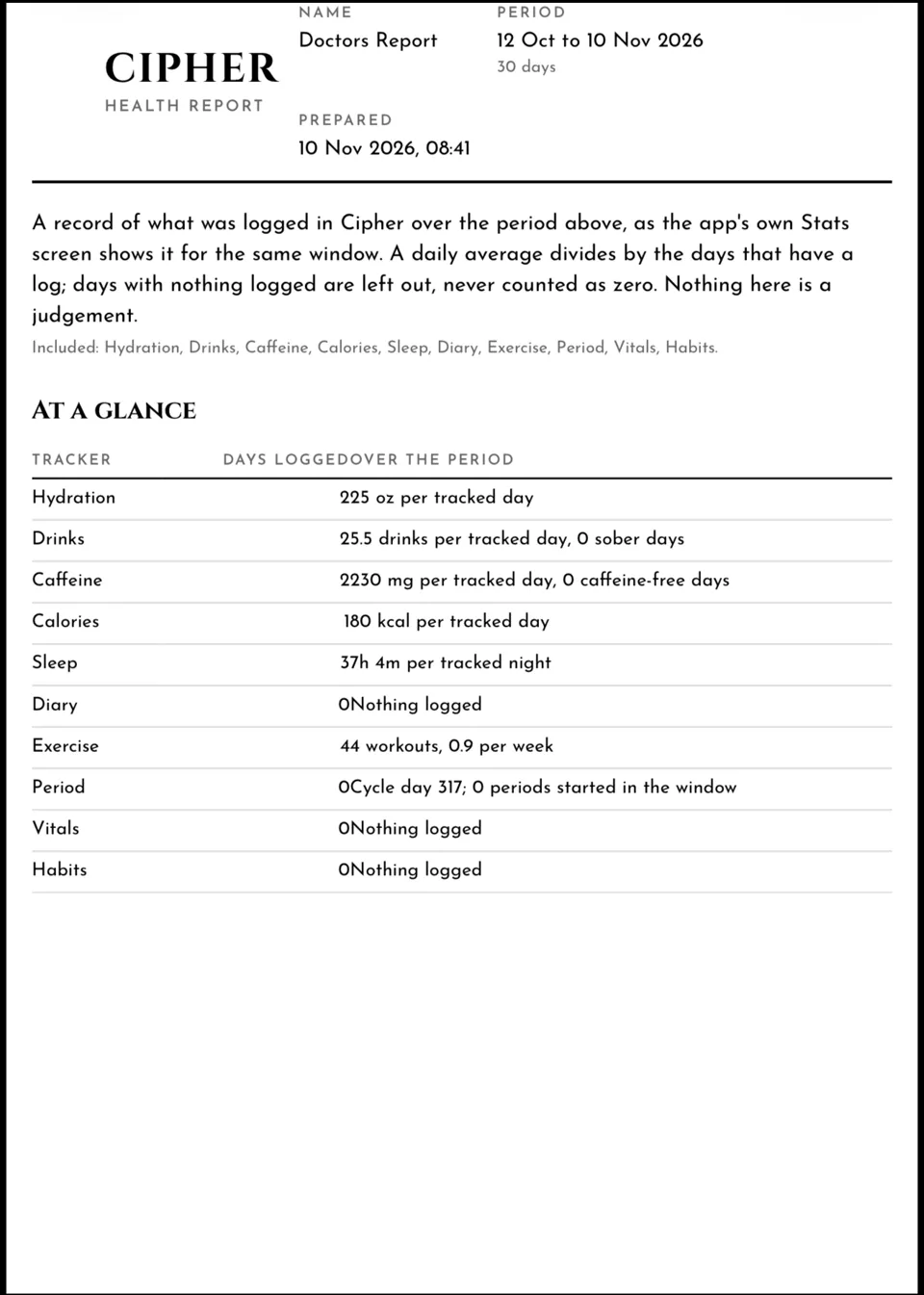
The PDF the Export pane produces, opened in Files on the phone. The paragraph at the top says how the averages were taken, so the person reading it does not have to guess.
The site that sells it
cipher-app.org is the second half of the project: a Next.js 16 and React 19 site in TypeScript, with a scroll-pinned vault door drawn in raw Canvas 2D and the theme toggle repurposed as the demo: light is plaintext, dark is ciphertext.
Its useful trick is that the marketing claims are testable. Rather than restate the app's data in prose, the site mirrors it as typed constants (the tracker registry, the design tokens, the literal shape of the stored ciphertext envelope), and its test suite asserts the copy against them. If the app changes its blob format, the website's tests fail. A build script fails the build over a per-route gzip budget, which is what killed the previous hero: eighty decoded WebP frames that hijacked the scroll.
The engineering discipline is the part worth pointing at. 3,822 unit tests run on the Node test runner with no framework and never render a screen; they read the source instead and pin what it must and must not contain. One gate fails the build if an emoji appears anywhere in the UI, which is why the app ships a 36-glyph SVG icon set of its own, the set the icons on this page are drawn from. Another fails it on an em dash in a shipping string. Firebase connections are certificate-pinned across three Google domains with backup pins so a rotation cannot lock anyone out, and decryption still walks four historical envelope formats so no early user's data was ever stranded.
Cipher is operated by Cipher Tracker LLC, an Illinois company, and ships with a full privacy policy and terms of service. It is an 18+ product, since it tracks alcohol, cannabis and nicotine, and it is not a medical device.